execution

Competitive Pace Isn’t the Real Risk

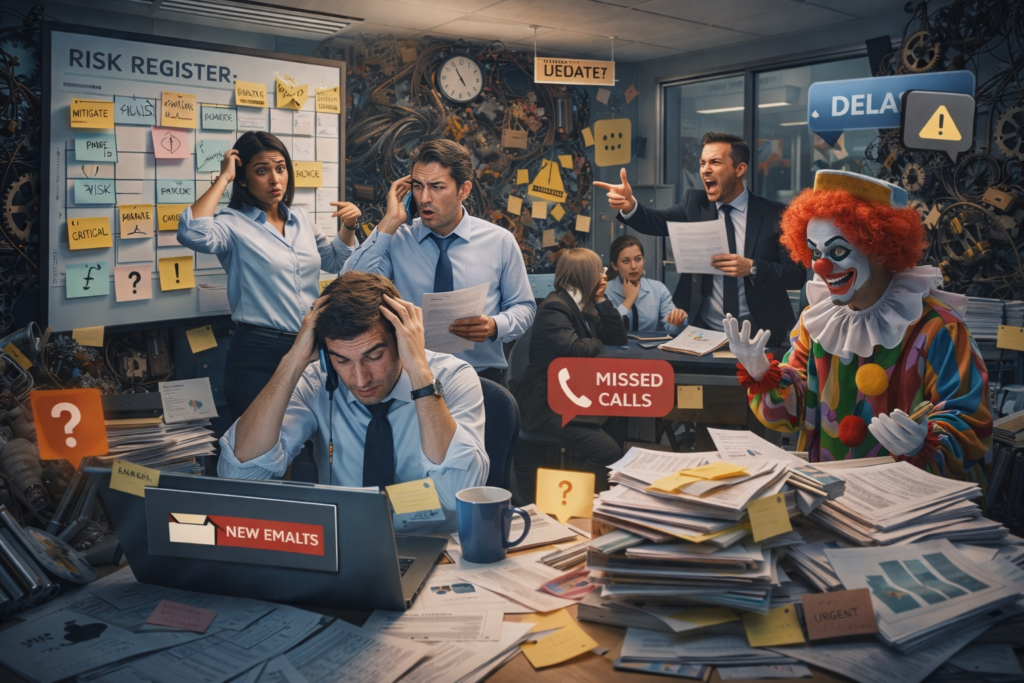
Why Speed Becomes Dangerous When Strategy Is Unclear This is the 2nd in a series of seven articles Few explanations feel as intuitively correct as this one: we’re moving too fast. Across boardrooms and executive teams, competitive pace is routinely cited as a top risk. Markets are shifting. Technology cycles are compressing. Expectations are accelerating. …

Competitive Pace Isn’t the Real Risk Read More »

What the 2026 Risk Report Doesn’t Say and Why It Matters

A seven-part executive series on why strategy, change, and risk keep disconnecting When strategy, change, and risk operate in separate orbits, something predictable happens: strategy becomes abstract, change becomes disruptive, and risk surfaces only after decisions are already made. The executive team agrees AI is strategic. Six months later, IT is managing pilots, operations is …

What the 2026 Risk Report Doesn’t Say and Why It Matters Read More »

The Long Hallway of Change

We’re not “going through a rough patch” anymore. We’re living in a long hallway. That hallway is what anthropologists call a liminal space: you’ve left the old room, the new one isn’t ready, and you’re standing in the dust and noise of renovation, wondering whether the floor will hold. In business, these grey spaces are …

The Long Hallway of Change Read More »

Why Your Hybrid Strategy Feels Like Pushing a Boulder Uphill

You’ve redesigned the office. Implemented hot-desks. Created flexible work policies. Yet nothing feels different; in fact, it might feel worse. Here’s why: You’re trying to run modern navigation software on an old GPS system. Dynamic work design and static operating models are incompatible business architectures. You can’t bolt one onto the other and expect results. …

Why Your Hybrid Strategy Feels Like Pushing a Boulder Uphill Read More »

The Capability Recession

Why trade uncertainty isn’t the real problem Everyone’s watching the trade talks. I’m watching something more dangerous. Across Canada, I’m seeing companies freeze. Investment in people – paused. Investment in systems – delayed. Investment in the capabilities that build resilience – shelved until “things stabilize.” The rationale is always the same: we need to protect …

The Capability Recession Read More »

Scroll to Top